
Function: move moisture off skin so nothing else in the system gets wet. That’s the entire spec for a base layer — not warmth, not style, just moisture transfer. Everything layered on top depends on this layer doing that one job correctly, which is why it’s worth more scrutiny than it usually gets.
Why the Base Layer Gets Priority Over Everything Else
It’s tempting to spend the most money and attention on an outer shell or a warm mid layer, since those are the pieces that feel like “real winter gear.” But the base layer is doing the work that determines whether everything else on top functions correctly. A mid layer’s insulation works by trapping warm, dry air — introduce moisture from a poorly performing base layer underneath, and that insulation loses much of its effectiveness, since wet insulation conducts heat away far faster than dry insulation regardless of how good the mid layer itself is. A weak base layer under an expensive outer shell still leaves you cold and damp; a strong base layer under a basic mid layer often performs better than the reverse combination.
What a Base Layer’s Job Actually Is
A base layer has exactly one job: move sweat away from skin so it can evaporate or transfer to the next layer, rather than sitting against your body getting cold and heavy. It is not primarily a warmth layer — that’s the mid layer’s job. A base layer that’s warm but doesn’t manage moisture well defeats its own purpose, since trapped moisture against skin causes the exact cold, clammy discomfort (and, per our cotton risk guide, real hypothermia risk) that good layering is supposed to prevent.
Reading a Base Layer’s Product Details
Fiber content listed as “100%” of a single material is generally a good sign for a base layer — it means no cotton is quietly mixed in, and it means the fabric’s behavior is predictable rather than a blend of two materials with different moisture properties. Fabric weight, listed in oz/yd², tells you roughly where a piece sits on the lightweight-to-midweight spectrum before you’ve even tried it on. Between two otherwise similar options, these two numbers — fiber percentage and weight — predict real-world performance more reliably than price or brand name.
Fiber: Synthetic vs. Wool
Two fiber types dominate good base layers, and they solve the moisture problem slightly differently. Synthetic (polyester or nylon) repels moisture and moves it to the fabric surface fast, drying quickly and staying light. Merino wool absorbs some moisture into the fiber core without feeling wet against skin, and resists odor build-up better over multiple wears — genuinely useful on a multi-day cold-weather trip where washing isn’t always an option. Synthetic dries faster and costs less; wool manages odor better and can feel warmer for its weight. Neither is wrong — cotton is the only fiber to actually rule out here.
Weight: Lightweight vs. Midweight Base Layers
Base layers themselves come in different weights, similar to how any technical fabric is measured in oz/yd². A lightweight base layer, in the same range as a good summer running shirt, works well for moderately cold conditions or higher-effort runs where you’re generating substantial internal heat. A midweight base layer adds more built-in warmth for genuinely cold conditions or easier efforts, at some cost to breathability and quick-dry speed. Owning one of each, rather than a single one-size-fits-all base layer, covers a wider range of winter conditions without needing to compensate entirely through the mid layer.
Fit: Snug, Not Loose
A base layer should sit close to skin — not compression-tight, but without excess loose fabric. A close fit keeps the moisture-moving surface actually in contact with skin (a loose base layer wicks less effectively, since gaps reduce direct contact), and it lets whatever mid or outer layer goes on top fit correctly without extra bulk underneath bunching up. A loose, baggy base layer undermines both its own performance and the fit of everything layered over it.
Sleeve Length and Coverage
A long-sleeve base layer covers more skin against wind and cold than a short-sleeve one, which matters more for a base layer than for warm-weather gear since there’s typically no separate arm coverage layered on top in moderate cold. For genuinely frigid conditions, a base layer bottom (tights or leggings in the same synthetic or wool fiber) follows identical logic for legs — the base layer principle applies to the whole body, not just the torso.
How a Base Layer Differs From a Regular T-Shirt
Not every synthetic shirt is built the same way. A general athletic tee prioritizes a looser, casual fit and a fabric weave chosen more for cost and softness than moisture management. A purpose-built base layer typically uses a tighter, moisture-optimized knit, a closer anatomical fit, and finishing details — flat seams, a longer back hem to prevent gapping when you bend forward, sometimes thumbholes to keep sleeves in place — specifically aimed at performance under sustained cold, sweaty use. The practical difference shows up most on long, hard efforts, where a base-layer-grade garment continues managing moisture effectively well past the point a generic tee starts underperforming.
Small Features Worth Checking For
A few details separate a good cold-weather base layer from an adequate one. Thumbholes at the cuff keep sleeves from riding up and add a small amount of hand coverage without needing gloves for a mild-cold run. A slightly higher, closer-fitting collar blocks a surprising amount of wind at the neck compared to a standard crew neck. Flat-lock seams reduce chafing risk under a mid layer worn on top, where the extra fabric-on-fabric contact from layering can make ordinary seams more noticeable than they’d be worn alone.
Caring for a Base Layer So It Keeps Performing
The same cold-water-wash, no-fabric-softener, no-high-heat rules that apply to any synthetic performance fabric apply here, and matter more for a base layer specifically, since it’s worn directly against skin on essentially every cold-weather run. Fabric softener residue and heat damage both degrade wicking performance over time — exactly the property a base layer exists to provide — so a base layer that isn’t cared for properly gradually stops doing its one job even though it still looks fine on the hanger.
When a Base Layer Alone Is Enough
For moderately cold, low-wind conditions at a real training effort, a good base layer on its own — without a separate mid or outer layer — is often sufficient, since running effort generates meaningful heat and a well-fitted synthetic long sleeve already provides some wind resistance and warmth beyond pure moisture management. Reserve the additional mid and outer layers from our full layering guide for colder, windier, or easier-effort conditions where a base layer alone won’t cut it. Use your first few cold-weather runs of a season to calibrate where that line actually sits for you personally — printed temperature guidance is a starting point, not a substitute for what your own body tells you after a handful of real runs.
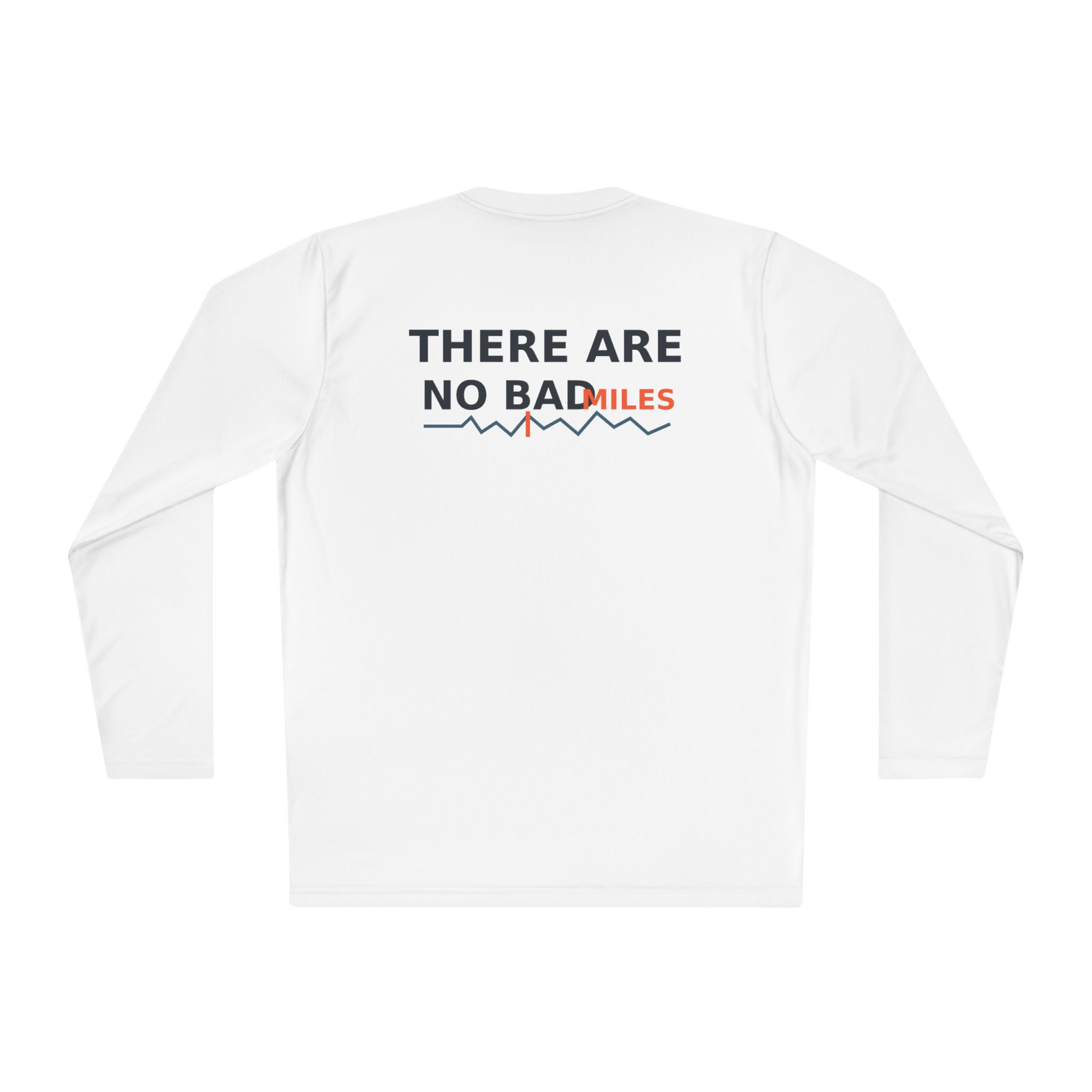
The Still Moving Long Sleeve is built specifically for this role — a lightweight 3.8 oz 100% moisture-wicking polyester layer sized for predawn starts and cooling weather, with the fiber content and fit this guide describes.
Building a Small Rotation
One base layer isn’t enough for regular winter training — it needs to dry or wash between wears, and cold-weather runs sweat through a base layer just as thoroughly as warm-weather ones. Two, ideally in different weights (a lighter one for milder cold, a slightly heavier one for the coldest days), covers most winter training without needing a large wardrobe of near-identical pieces. Rotating between them also gives each piece more time to fully dry between wears, which matters for wicking performance over the life of the garment.
Summary
- Function: moisture transfer, not warmth — that’s the mid layer’s job.
- Fiber: 100% synthetic or wool; cotton and cotton blends are disqualified regardless of percentage.
- Fit: snug against skin, not compression-tight, not loose.
- Own at least two, in different weights, so one can dry while the other’s in rotation.
Frequently Asked Questions
Is a compression shirt the same thing as a base layer?
Not exactly — compression gear is built primarily for muscle support and very tight fit, while a base layer’s primary job is moisture management with a snug (not maximally tight) fit. Some products do both, but they’re solving different problems.
Can I use a summer running shirt as a cold-weather base layer?
Often, yes — if it’s 100% synthetic or wool and fits snugly, the same fabric that wicks well in summer heat wicks well as a winter base layer. The fabric-content and fit requirements are the same in both seasons; only the added mid and outer layers change.
How many base layers should I own for regular winter training?
At least two, so one can be worn while the other dries or washes — cold-weather base layers get sweated through on every run, and you don’t want to be reaching for a still-damp one the next morning.